Around New River and the rest of the North Valley, a trimmed tree that looks fuller than before usually isn’t a good sign. If that sounds like your freshly cut tree, you might be wondering: Why does my tree look bushy after trimming? In most cases, the trim took too much of the crown or landed in the wrong spot, so the tree either responded with a thicket of thin shoots around each cut or a bare, stubby frame with foliage only at the tips.
That fullness is misleading, since the new shoots can snap more easily in the wind. As we know, monsoon season brings plenty of it, and this past August brought gusts over 60 mph through the Phoenix area.
Key Takeaways
- Dense shoots or bare limb ends after a trim point to heavy or poorly placed cuts, not healthy fullness.
- New shoots anchor only in the outer layers of the parent branch, so they break more easily in the wind than the growth they replaced.
- Desert sun hits bark that used to be shaded, which can lead to cankers, bark splitting, and dead branches.
- Many trees can be corrected over several years, but have a certified arborist assess yours first.
Why Does a Trimmed Tree Grow Back So Thick?
A trimmed tree grows back thick because heavy cuts can strip 50 to 100% of its leaf-bearing crown, and the tree responds by pushing dense shoots from dormant buds near each cut to replace the leaves it uses to make food. That thick regrowth is different from healthy growth in two ways:
- It’s a survival response to the lost leaves.
- The shoots anchor only in the outer layers of the parent branch, not in the socket of overlapping wood a naturally grown branch builds over time.
Such shoots are usually referred to as water sprouts. A few on a properly pruned tree are normal, but a thick thicket around every cut isn’t.
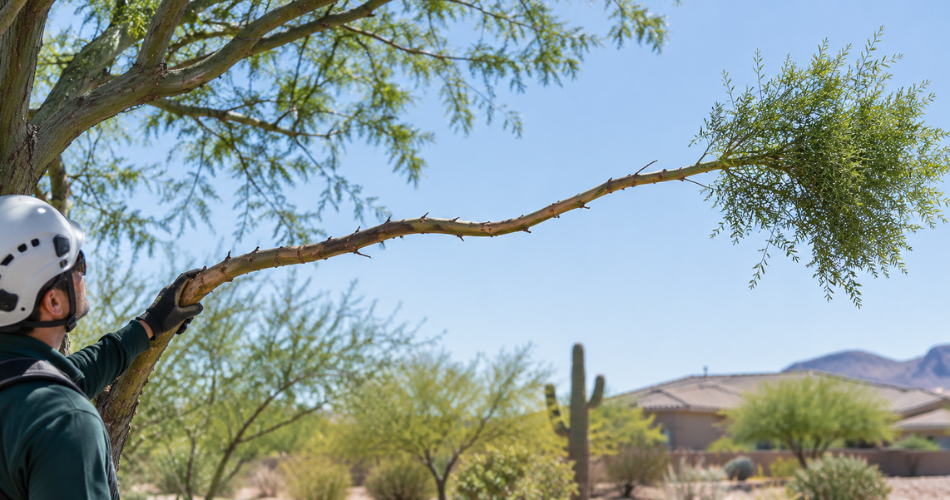
Lion-tailing leaves the limb carrying all its weight at the end, which makes it harder for the branch to handle wind.
Which Bad Cuts Make a Tree Look Bushy?
Topping, lion-tailing, and flush or stub cuts cause most of the bushy, bare-tipped look, and each leaves a different pattern. Knowing which you’re dealing with tells you where to look for damage and what to ask an arborist to check.
Topped Branches
Topping cuts branches back to stubs, or to side branches too small to take over as the main leader, and it should never be done. Here is how to spot it and why it backfires:
- It’s also called heading, tipping, hat-racking, or rounding over.
- The tree is left with a flat or rounded canopy instead of its natural shape.
- People usually do it to make a tree smaller or safer, but it doesn’t reduce risk and can raise it.
Lion-Tailed Branches
Lion-tailing strips the inner limbs off a branch, leaving foliage only at the end, like the tuft on a lion’s tail. Stripping the inner foliage changes how the limb handles sun and wind:
- Even foliage along a branch distributes wind load, so removing it leaves the limb more stressed and triggers sprouts along it.
- The newly exposed bark can become discolored or sun-damaged.
Flush Cuts and Stub Cuts at the Branch Collar
A flush cut slices through the branch collar, the swollen ring where a branch joins the trunk, while a stub cut leaves part of the branch behind. Both leave the tree open to decay:
- An injured or removed collar lets decay organisms enter through the cut.
- Older cuts often show dark, soft, or sunken wood around them.
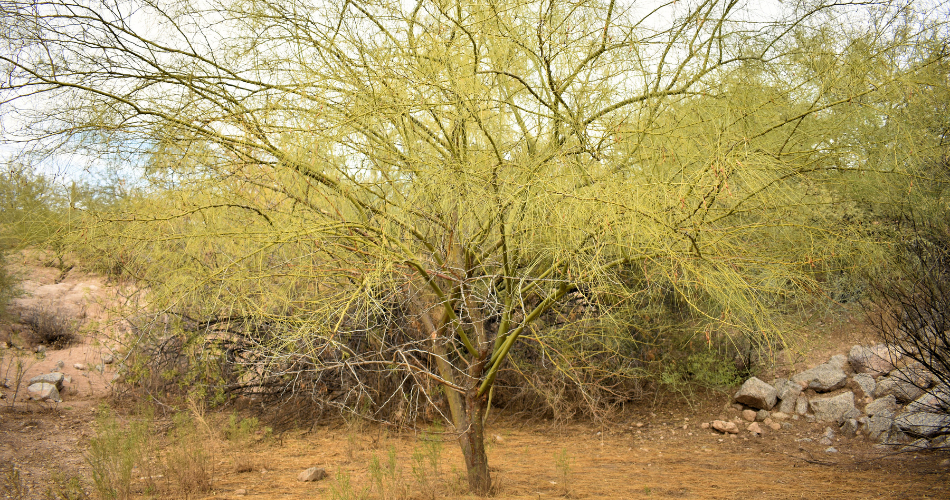
Bark that used to be shaded can burn quickly once the leaves above it are gone.
Is My Tree in Trouble After a Bad Cut?
Yes, your tree is likely in trouble if the cuts left any of these warning signs. Walk around the tree and check the cut surfaces, the bark around them, and the limbs above them. Look for:
- Split or discolored bark
- Cankers, which are sunken, dead patches in the bark
- Dead or dying branches
- Visible decay at stubs
Normal regrowth, by contrast, is a modest scattering of new leaves along a limb.
The Difference the Desert Sun Makes
Desert sun raises the stakes because removing leaves suddenly exposes branches and the trunk to intense heat and light. Bark that was shaded takes the first hit, and some desert species are hit harder than others:
- Sunburned tissue under the bark can lead to cankers, bark splitting, and the death of some branches.
- Palo verdes rely on green bark for photosynthesis, removing too much of the tree stresses them even more.
Why Hidden Decay Matters Later
Hidden decay matters down the line because trees often can’t wall off the multiple large wounds that heavy cutting leaves. Decay works inside the wood and can progress for years before anything shows on the outside, so a tree can look fine while rot spreads. An early assessment gives you the best chance to catch it while corrective pruning can still make a difference.
Can a Badly Trimmed Tree Recover?
Yes, many badly trimmed trees can recover, but it takes patient corrective pruning over multiple years. How well yours recovers depends on how much was removed and the condition of the cuts. While the new shoots develop, there are three things you can do:
- Water deeply, but infrequently, at the drip line (the outer edge of the canopy). Deep, infrequent watering encourages a deep, drought-resistant root zone.
- Resist trimming the bushy growth back yourself, since heavy cuts caused the problem. Once the tree has pushed new growth, an arborist can pick the strongest shoots to become its new leaders.
- Expect corrective pruning to happen in phases, so no single visit fixes everything.
How Corrective Pruning Rebuilds Structure
Corrective pruning rebuilds structure with reduction cuts, which shorten a limb back to a branch that can take over as its new end. That works only when the cut lands in the right place:
- Reduction Cut : The cut lands at a side branch at least one-third the diameter of the limb being removed.
- Heading Cut : The cut lands on a smaller branch or a stub instead, which pruning standards generally treat as unacceptable.
Most of the time, you can hardly notice a good job by a certified arborist (that’s the goal). The best timing for each type of tree also varies, so the season matters just as much as the cut itself.
What a Certified Arborist Checks
A certified arborist checks four things before a single cut is made. Each one shows a different way the earlier cuts may have damaged the tree:
- Collar damage
- Decay at stubs
- How securely the new shoots are attached
- Sunburn damage
From there, the arborist decides whether the tree is worth restoring and the order in which to prune it.
Could Other Trees on My Property Be Affected?
Yes, it’s possible. The same hands or habits that cut one tree usually cut others, so check the rest for the same cuts and the same clusters of thin and upright shoots. Climbing spike wounds are another sign of past work. Spike puncture wounds can act as entry points for both pests and disease, and those marks stay on the bark long after the crew packs up and leaves.
What a Property-Wide Assessment Looks At
A property-wide assessment applies the same four-point check to every tree. Then, it sorts them into three groups:
- Trees that need corrective pruning right away.
- Trees that only need to be left alone and watched.
- Trees that came through fine and can stay healthy with a month-by-month tree care plan.
Frequently Asked Questions About Badly Trimmed Trees
Should I put sealant or wound paint on the cuts?
No. Research shows wound dressings don’t reduce decay or speed wound closure, and most experts recommend leaving the cuts bare.
Do pines and other conifers recover from heavy cuts?
Usually not. Most pines and other conifers lack the hidden buds broadleaf trees use to regrow after heavy cuts, and topping can ruin conifers for life.
How do I find a qualified tree trimmer?
Check credentials before you hire anyone. You can search for a certified arborist and verify a credential on the ISA site. Titan’s owner, Aaron Eubank, is an ISA Certified Arborist (#2311), and you can look him up the same way.
What should I do if a tree service has already poorly trimmed my tree?
Take dated photos of the cuts and ask the company to explain what they did and why. Photos also give a second arborist a clear record to compare against as the tree regrows.
Can I be held responsible if a badly pruned tree drops a limb?
Possibly, if the tree was topped. Industry standards treat topping as an unacceptable practice, so damage from a failed branch may lead to a finding of negligence. This isn’t legal advice, so check with your insurer or an attorney about your situation.
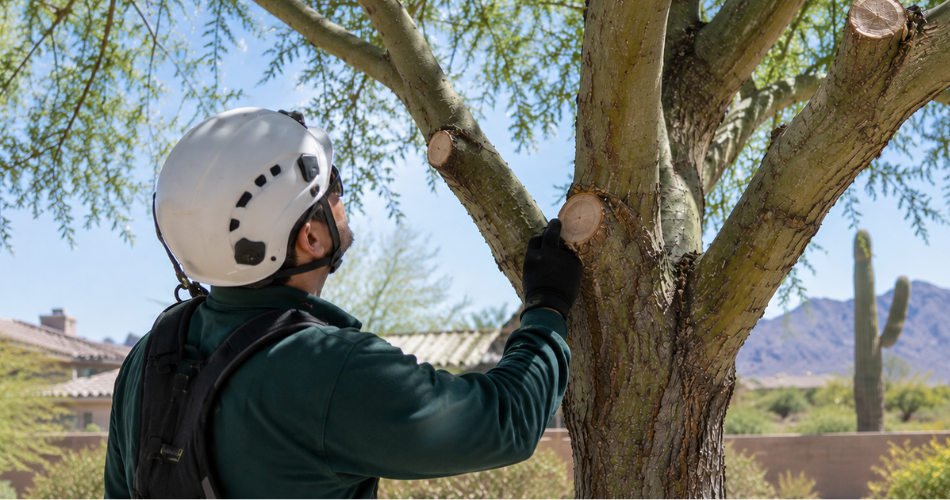
An in-person assessment shows what earlier cuts did to the tree and what order to fix them in.
Let Titan Tree’s Arborists Look at Your Trees Before the Next Cut
It’s a lot easier to judge previous cuts in person than from a picture or description. From New River to Cave Creek and Black Canyon City, we can look at your tree and any others you’re worried about as part of our pruning and trimming service.
Call us at 480-418-4026 to set up a visit, or request a free quote online.
See Our Latest Articles

More Articles Like This
Titan Tree Care is a full-service tree care company located in Anthem, AZ and serving all of North Phoenix. We offer a wide range of services to meet your tree care needs, including tree and palm trimming, tree pruning, tree removal, stump grinding, and more. We also offer insect or disease treatments and fertilization services. We are dedicated to providing high-quality, safe, and effective tree care services to our customers and work hard to ensure that your trees are healthy and look their best.