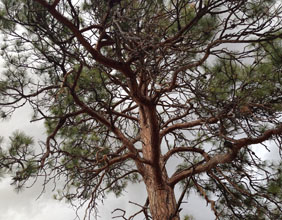
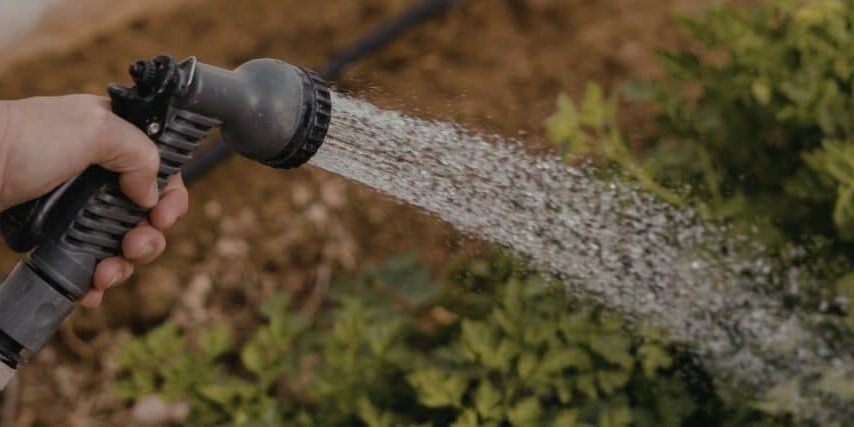
Coming into summer 2026, nearly 90% of Arizona was under active drought conditions, which is the result of the hottest and 28th driest January-March ever recorded. In North Phoenix and Anthem yards, that means trees didn’t get the soil moisture recharge they usually bring into summer, and many are already under stress before peak heat arrives.
Getting the watering right from here makes more of a difference than usual because the consequences of both underwatering and overwatering show up in wilting, leaf drop, and dieback that’s easy to misread. How often to water trees in summer depends on the species, age, and whether your irrigation is reaching the root zone. In North Phoenix, temperatures regularly hit the high 90s by early June, which means now is the time to adjust.
Key Takeaways
- Deep and infrequent watering beats shallow and frequent because tree roots in Phoenix’s clay soil need water at 2–3 feet deep, not just the top few inches.
- Desert-native and non-native trees have very different water needs and treating them the same is one of the most common watering mistakes in North Phoenix.
- Newly planted trees need more frequent watering during summer than established trees, regardless of species.
- Lawn sprinklers don’t provide enough water for established trees because tree roots extend much deeper than grass roots.
- Check soil moisture before you water—surface dryness in clay soil doesn’t mean roots are dry.
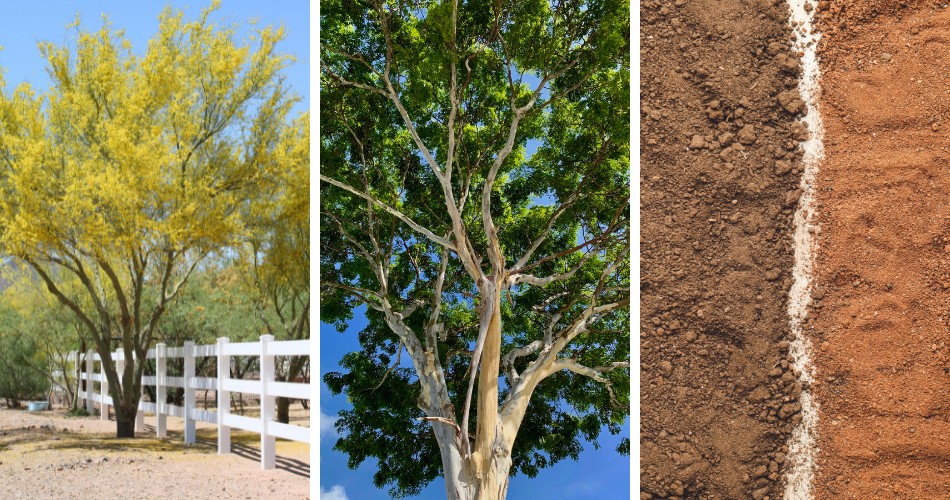
Watering needs vary significantly between desert natives like palo verde and large non-native shade trees, and Phoenix’s clay soil affects how water moves through the root zone.
How Often Should You Water Trees in Summer?
In the summer, how often you water trees primarily depends on:
- Species
- Age
- Soil Type
In Phoenix’s peak heat, most trees need water at least every one to two weeks, and some need it more frequently. Research from the University of Arizona confirms plants use three to five times as much water during the hot, dry, windy season as they do in winter. This gap catches many homeowners off guard.
Desert Natives (Palo Verde, Mesquite, Ironwood)
Desert natives are built for Arizona, but being drought-tolerant doesn’t mean they’re drought-proof, especially in a year like this one. Well-established specimens can often survive on natural rainfall during a normal summer. With active drought conditions and depleted soil moisture, even mature natives benefit from one deep water (two to three feet below the surface) every two to three weeks during sustained heat over 100°F.
Young desert natives, which includes trees under three years old, need supplemental water more frequently during extreme heat, even though they’re an adapted species. It’s worth noting that overwatering a palo verde is actually a more common problem than underwatering once it’s established. Before running the hose, check soil moisture if you’re unsure.
Non-Native Shade Trees (Ash, Elm, Olive, Chinese Pistache)
Non-native shade trees have higher water demands than desert natives and can’t rely on natural rainfall after establishment. In peak summer heat, plan on watering every 7-14 days. These trees also have large canopies that drive high evapotranspiration rates, which means they lose more water to the air than many people expect. To keep up effectively, deep watering is essential.
Citrus
In Phoenix yards, citrus trees are among the thirstiest landscape trees. Contrary to desert natives, they don’t self-regulate in the heat. Established citrus typically needs water about once a week in the summer via a deep watering approach. Beyond hydration, deep watering also flushes excess soil salts, which is an important benefit in Arizona’s naturally salt-heavy soils that can otherwise build up and stress the tree over time.
In the first three to six months, young citrus needs daily watering for the first few weeks before gradually tapering as the tree establishes.
Palms
Palms are entirely different. Not all of them have the same water needs, and the gap between species is large. Desert-adapted palms are drought-tolerant once established; every 5-10 days is usually fine during the summer.
Tropical palms, on the other hand, are more water-demanding and fall toward the more frequent end of the range during peak heat. Species aside, water at the drip line and never at the trunk—palm root systems extend outward, and trunk watering doesn’t reach them.
Why Are Young Trees More Vulnerable to Summer Heat?
Newly planted trees haven’t had time to develop the deep, widespread root systems that established trees rely on during extreme heat. Instead, most of their roots are still confined to the original root ball, which dries out much faster than the surrounding soil.
For the first two to three years after planting, check soil moisture regularly and adjust your watering schedule as temperatures change rather than relying on a fixed routine. Even drought-tolerant species need more frequent watering while they’re establishing. Learning how to water newly planted trees in the desert starts with proper planting techniques, since healthy root development depends on both.
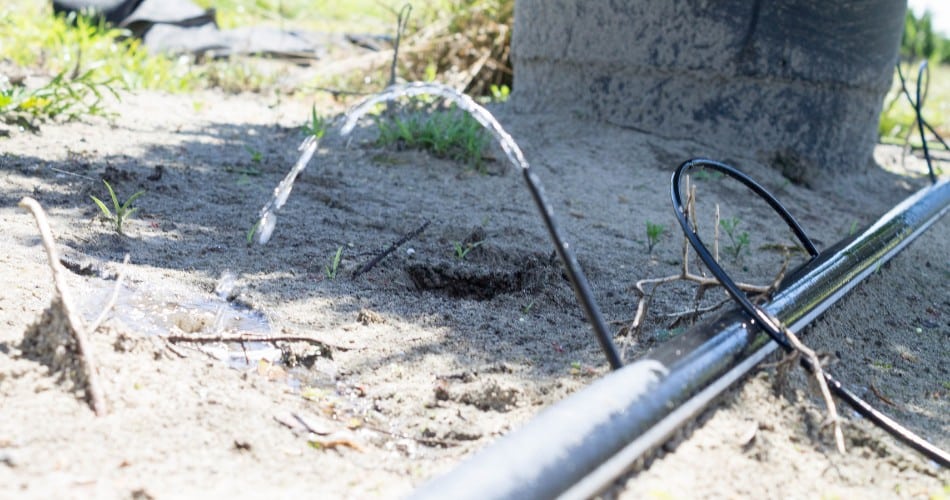
Drip irrigation delivers water slowly at root level—the most effective watering method for Phoenix trees.
What’s the Best Way to Water Trees in Phoenix?
The best way to water trees in Phoenix is deep and slow, delivering water at the drip line, not the trunk, early in the morning before heat peaks.
Drip Irrigation
Drip irrigation is the most effective watering method for Phoenix trees. Slow delivery allows clay soil time to absorb moisture instead of letting it run off the surface, and it deposits water right where the roots need it. Most people fail to remember that emitters have to be positioned at the drip line (outer edge of canopy), not clustered at the base of the trunk. As the tree grows, move the emitters outward to track the expanding canopy.
Run times of two hours or more per session are generally needed to push moisture down to adequate depth. A short burst may wet the surface and leave the root zone below dry as a bone.
Hand Watering and Hose
Hand watering works well for newly planted trees when a dedicated irrigation system isn’t in place yet. Low and slow is the key; move around the tree for even distribution rather than holding the hose in one spot. With hand watering, the most common mistake is the same as with drip: short sessions that wet only the top few inches, which gives the impression of adequate watering while leaving roots dry below.
What to Avoid
A few watering habits that consistently cause problems in North Phoenix yards include:
- Lawn Sprinklers: Grass irrigation systems are calibrated for 6–8 inch root depth. Tree roots need water at 2–3 feet. A tree “watered” entirely by lawn sprinklers is consistently underwatered at the root level, even when the soil surface looks moist.
- Watering at the Trunk: Water belongs at the drip line, where feeder roots are active. Watering directly at the trunk wastes water and creates conditions that promote rot and girdling root development.
- Afternoon and Evening Watering: Water before 8 AM. Afternoon evaporation in Phoenix’s summer heat is extreme, and a significant portion of what you apply never reaches the roots. Evening watering in clay soil can leave the root zone saturated overnight, which creates fungal conditions in an otherwise arid climate.
Efficient tree watering in arid climates goes deeper on irrigation setup and water-use efficiency.
How Do You Know If Your Tree Is Getting the Right Amount of Water?
The most reliable check is a screwdriver pushed into the soil, not a simple look at the surface, which will mislead you in North Phoenix’s clay soil in both directions.
The Screwdriver Test
Push a long screwdriver or piece of rebar 12-18 inches into the soil at the drip line. If it slides in without much resistance, the soil at that depth is adequately moist. If you hit firm resistance, that layer is dry and the tree needs water. It’s a 30-second test and is much more reliable than people realize.
Signs of Underwatering
Underwatered trees show they aren’t getting enough water in the foliage and branch tips first:
- Dry, brittle, or curling leaf edges; leaves that crumble when touched
- Leaf drop in midsummer that isn’t triggered by monsoon rains
- Twig dieback at branch tips
- Stunted or absent new growth during the growing season
Signs of Overwatering
Overwatering can be more difficult to spot because the symptoms tend to look identical to drought stress:
- Wilting with wet soil—waterlogged roots can’t absorb oxygen, causing the same visible wilting as drought stress
- Yellow or pale leaves; early leaf drop
- Soil that stays soggy 3+ days after watering
- Fungal growth at the base of the tree or a foul smell from the root zone
If your tree is already showing signs of drought stress, watering alone may not be enough to reverse the damage.
Frequently Asked Questions About Watering Trees in Summer
How deep should I water my trees in Phoenix?
Water should reach two to three feet below the surface to penetrate the root zone. In North Phoenix’s clay soil, this requires long watering sessions, usually two or more hours with a drip system. A screwdriver or rebar pushed into the soil at the drip line will confirm whether water is reaching adequate depth.
Can I use my lawn irrigation system to water trees?
Lawn sprinkler systems are calibrated to water grass roots at six to eight inches deep, much shallower than tree roots. Trees watered consistently by lawn sprinklers only are probably being underwatered at the root level, even if the soil surface looks moist. Trees need their own dedicated irrigation running longer and deeper than any grass system provides.
Do desert trees like palo verde need water in summer?
Yes. While fully established palo verdes are well adapted to the desert, they still benefit from deep watering during prolonged periods of extreme heat and drought. During active drought conditions, water established trees every two to three weeks. Young palo verdes need more frequent watering until they’re fully established.
What time of day should I water trees in summer?
The best time to water trees in summer is before 8 AM. This allows water to penetrate before surface evaporation accelerates in the heat. Avoid afternoon watering during extreme temperatures, and avoid evening watering in clay soil, which can stay saturated overnight and create conditions for fungal issues.
How do I know if I’m overwatering my trees?
Wilting with wet soil is the most counterintuitive sign of overwatering. Roots that are waterlogged can’t absorb oxygen, which causes the same wilting appearance as drought. When you see wilting, check the soil before adding more water.
How much water do newly planted trees need in Phoenix summer?
Newly planted trees need daily watering for the first few weeks after planting, then gradually less frequent watering as their root systems establish. During periods of 100°F+ heat, check soil moisture daily and water whenever the soil is dry six inches below the surface. Don’t assume a drip system programmed for established trees is providing enough water.
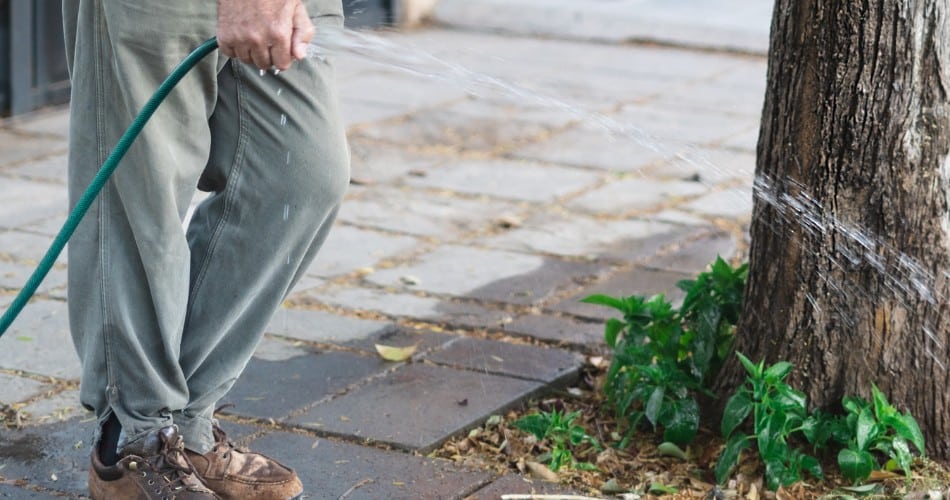
Watering at the trunk is one of the most common mistakes in North Phoenix yards—water belongs at the drip line, where feeder roots can actually use it.
Get Expert Help for Summer Tree Stress
In Phoenix, getting summer watering right comes down to getting into the habit of checking before you water. At root-depth, soil moisture tells you more than any fixed schedule. In a drought year, that check is more important than usual.
If your trees are showing stress that isn’t getting better, the cause may go deeper than moisture. Titan’s ISA Certified Arborists can diagnose what’s going on. Call us at 623-444-8448 or request a quote from Titan Tree Care online.



More Articles Like This

Titan Tree Care is a full-service tree care company located in Anthem, AZ and serving all of North Phoenix. We offer a wide range of services to meet your tree care needs, including tree and palm trimming, tree pruning, tree removal, stump grinding, and more. We also offer insect or disease treatments and fertilization services. We are dedicated to providing high-quality, safe, and effective tree care services to our customers and work hard to ensure that your trees are healthy and look their best.