
Phoenix summers are harder on trees than they used to be. The four hottest summers on record have all happened within the last decade, and each one has brought another long run of 110°F+ days that pushes trees past what they were built to handle.
The good news is that a heat-stressed tree is usually a savable tree. What that takes depends on the species, how far the stress has gone, and how fast you respond. A palo verde, a citrus, a queen palm, and a 20-year-old ash all need different care; and matching the right response to the right tree is what turns a stressed canopy into a full recovery.
Key Takeaways
- Most heat-stressed trees in Phoenix can recover, but the outcome depends on species, severity, and how quickly you respond.
- To help a heat-stressed tree recover, check soil moisture before watering, water deeply at the drip line when needed, protect exposed bark, and avoid summer pruning, fertilizing, or other unnecessary stress while the tree recovers.
- There’s no single temperature that kills a tree; duration, nighttime lows, tree age, and reflected heat from nearby surfaces matter more than the number on the thermometer.
- Native trees, like palo verde and mesquite, often drop leaves on purpose in summer; that’s survival, not failure.
- Non-native trees, like citrus, palms, ash, and pistache, show heat stress earlier and recover more slowly, which makes species-specific care critical.
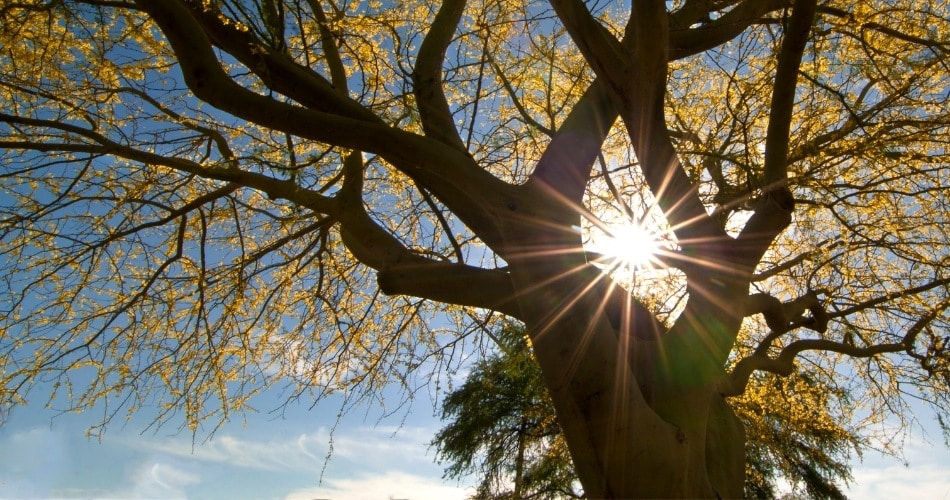
Phoenix’s intense summer sun puts even mature, established shade trees under stress — especially during long stretches of 110°F-plus days with warm overnight lows.
How Much Heat Can a Tree Withstand?
Duration matters more than peak temperature. A tree can handle a 115°F afternoon if nights cool down and the heat breaks within a few days — but a week of 110°F+ days with warm overnight lows is what does real damage. Research shows that heat injury in plants depends on several factors working together, including the time of year, the tree’s condition heading into the heat, and the immediate environment around it — which is why two trees on the same street can fare very differently in the same heat wave.
Why Warm Nights Matter More Than Daytime Peaks
Trees can’t recover overnight when lows stay above 95°F, which is routine in the Valley from June through August. Cool nights are when trees rest and rebuild energy reserves; warm nights force them to keep burning through stored sugars, and over a long heat wave they run an energy deficit they can’t close.
What Are the Early Warning Signs of Heat Stress in Trees?
The earliest warning signs show up in the leaves and progress to the trunk and branches if the stress continues. Any one of these on its own is worth watching; two or three together means it’s time to step in:
- Wilting that persists into morning (not just afternoon droop)
- Leaf margins turning brown and crispy, with the damage working inward
- Premature leaf drop, especially from the upper canopy
- Bark cracking or splitting on the southwest-facing side of the trunk
- No new growth since spring, or dieback starting at the branch tips
Some symptoms — like thinning canopies, sparse new growth, or off-color leaves — show up before full-blown heat stress and are worth catching early. Other early signs of tree stress in North Phoenix often surface weeks before a tree is visibly struggling.
PRO TIP: Check your trees first thing in the morning, not the afternoon. Most desert trees wilt some during peak heat — what matters is whether they’ve recovered by sunrise the next day.
How Do Different Phoenix-Area Trees Respond to Heat Stress?
Trees in North Phoenix fall into four groups when it comes to heat stress: desert natives that handle it with minimal help, non-native shade trees that struggle visibly, citrus with its own distinct symptom pattern, and palms that need species-specific attention.
Palo Verde, Mesquite, and Other Natives
Natives are built to ride out a Phoenix summer. Palo verdes drop leaves on purpose during extreme heat and keep photosynthesizing through their green bark until conditions improve. Mesquite and ironwood do something similar, pulling resources back from foliage to protect the trunk and roots — it’s exactly how desert trees get through summer.
Leaf loss alone is rarely cause for concern with these species; real trouble in a native tree looks different than what most homeowners expect:
- Bark splitting
- Sap oozing from the trunk
- Whole branches dying back to the main stem
Why Non-Native Shade Trees Struggle Most
Non-natives — ash, elm, pistache, and olive — were bred for cooler summers and richer soil than they get here, so they hold their leaves through summer instead of dropping them the way natives do. That makes them work harder during heat waves and shows up as:
- Leaf scorch starting at the tips
- Thinning canopies
- Sunburned bark where the canopy stopped shading the trunk
Heat stress on these trees doesn’t always look dramatic week to week — but recovery typically takes a full growing season, which is why early intervention matters more here than with any other type of tree. Consistent deep watering is the foundation, and these species often benefit from soil treatments that improve their resilience in our alkaline desert soil.
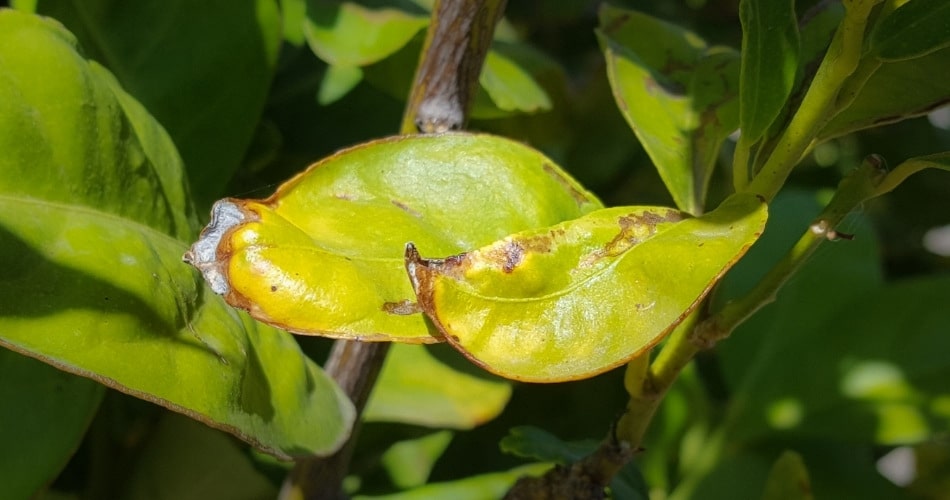
Heat-stressed citrus leaves curl inward and develop dry, browned edges as the tree tries to reduce water loss during extreme Phoenix heat.
How Citrus Trees Show Heat Stress
Heat-stressed citrus shows a distinctive set of symptoms that are different from what you’d see on most other trees. Watch for:
- Leaf curl with a dull, grayish-green cast and tips that look burned
- Sudden fruit drop, especially of small developing fruit
- Sunscald on the trunk and exposed branches (cracked or peeling bark on the south- and west-facing sides)
- Wilted, drooping leaves that don’t recover overnight
Can Citrus Trees Recover from Heat Stress if Leaves Turn Yellow?
Yes, usually citrus trees with yellow leaves can recover from heat stress, as long as you act before the leaves start dropping. Yellow leaves on citrus are rarely caused by heat alone — nitrogen shortage and salt buildup from Phoenix’s hard tap water are far more common, and a heat wave is often what tips a borderline nutrient or salt issue into visible yellowing.
Once you correct the underlying watering or nutrient problem, the tree usually recovers fully — provided the trunk gets protection from sunburn for the rest of the season.
How to Tell if Your Palm Tree Is Suffering from Heat Stress
Heat-stressed palms show a specific signature that’s easy to spot once you know it. Look for:
- Weeping fronds with burned tips
- Brown margins working in from the edges
- Sap oozing from the trunk in severe cases
Once you’ve spotted the symptoms, the species tells you how urgent the situation is: Date palms and Mexican fan palms handle Phoenix heat without much trouble — symptoms on these palms are usually a sign your watering needs adjusting.
Queen palms are a different story. There’s been widespread queen palm decline across the Valley during extreme summers — and on a queen palm, those same symptoms usually mean the tree is in real trouble, not just stressed.
The fix in both cases starts with watering — palms need a shallow ring within two to three feet of the trunk every 2-4 weeks in summer, not the deep-and-wide drip-line pattern that works for shade trees.
How Can You Save a Tree from Heat Stress?
Focus on deep watering at the drip line, protecting the trunk, and leaving the tree alone until it recovers. Saving a heat-stressed tree is mostly about not making things worse — overwatering, summer pruning, and fresh mulch on hot soil can all push a stressed tree further into decline. Most of the recovery happens after you stop intervening, not while you’re working on the tree.
Check Soil Moisture Before You Water
Phoenix soil often looks dry on the surface while staying wet at root depth. Push a long screwdriver or soil probe down 12 inches before you decide to add water as overwatering a heat-stressed tree causes root rot, which is often harder to come back from than heat stress itself.
Water Deeply, Not Frequently
Soak to a depth of 2-3 feet at the drip line and beyond — never near the trunk — using a soaker hose or slow drip rather than a sprinkler. Sprinklers create surface runoff on Phoenix’s clay-heavy soil and waste most of the water you’re trying to deliver, while deep watering at the drip line reaches the feeder roots where it actually counts. Time it for early morning (between 4 and 7 a.m.) to minimize evaporation and give roots the longest window to take up moisture before the day heats up.
Mulch the Root Zone
Apply 3-4 inches of mulch around the root zone, keeping it a few inches back from the trunk. Mulch moderates soil temperature, slows moisture loss, and buffers roots against the worst of the heat.
PRO TIP: Don’t add fresh mulch during a heat wave. Mulch applied to hot soil can trap heat at the root zone and make stress worse. Lay it down in spring while soil is still cool, then leave it alone.
Protect Young or Thin-Barked Trunks
Citrus trees and any tree under three years old are especially vulnerable to sunscald on the southwest-facing side of the trunk, which can crack the bark and create entry points for pests and disease. A professional treatment to protect exposed bark is one of the most cost-effective things you can do for a young tree’s first few summers in Phoenix.
Skip Summer Pruning and Fertilizing
Fresh cuts and new growth add stress instead of relieving it. Pruning exposes interior branches to sun damage they aren’t acclimated to, and fertilizer pushes growth the tree doesn’t have the resources to support.
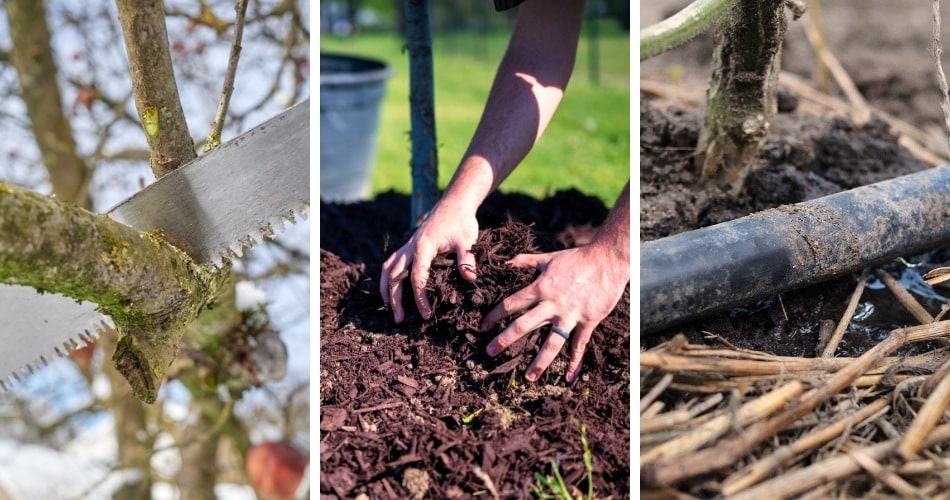
Three of the most effective ways to prepare a Phoenix tree for summer heat: structural pruning before May, mulching the root zone in spring, and consistent deep watering through drip irrigation.
Frequently Asked Questions About Trees Recovering from Heat Stress
How can I tell if my tree is dead or just dormant after a heat wave?
A quick scratch test will tell you. Scrape a small patch of bark off a suspect branch — green tissue underneath means the branch is still alive, and brown and dry means it’s gone. Check several branches around the tree before concluding the whole thing is dead, since heat-stressed trees often lose individual branches while the main structure stays alive.
Does tree size affect heat tolerance?
Larger, established trees generally handle heat better because their root systems reach deeper soil moisture. However, very large trees with existing health issues — construction damage, compacted soil, or past improper pruning — can decline quickly under heat stress because they have more canopy to support and less margin for error.
Will wrapping or covering my tree during a heat wave help it survive?
Tree wraps and full canopy covers generally don’t help and can make stress worse by trapping heat and restricting airflow. Shade cloth positioned to block late-afternoon sun on the trunk of a young or thin-barked tree can help, but it should be suspended with airflow around it rather than wrapped directly on the tree.
My tree looked fine all summer but is declining now — can summer heat cause delayed damage?
Yes. Heat-stressed trees often show their worst symptoms months after the heat wave because they’ve been burning through stored energy reserves the whole time. Decline that shows up in fall or the following spring is a known pattern in Phoenix and worth having assessed before it progresses.
Get an Expert Assessment from Titan Tree Before Heat Damage Gets Worse
Heat stress is rarely the end of the story for a Phoenix tree — most pull through with the right care, and acting sooner usually means a fuller recovery and less long-term damage to live with.
Knowing exactly what the right care looks like is the part most homeowners get stuck on, and that’s where a professional assessment matters. Titan’s ISA Certified Arborists have been caring for trees across North Phoenix for over 25 years, and we know how heat stress shows up on every species in your yard. Request an evaluation online or give us a call at 623-444-8448 and we’ll tell you exactly where your tree stands — and what it’ll take to bring it back.
See Our Latest Articles


More Articles Like This

Titan Tree Care is a full-service tree care company located in Anthem, AZ and serving all of North Phoenix. We offer a wide range of services to meet your tree care needs, including tree and palm trimming, tree pruning, tree removal, stump grinding, and more. We also offer insect or disease treatments and fertilization services. We are dedicated to providing high-quality, safe, and effective tree care services to our customers and work hard to ensure that your trees are healthy and look their best.