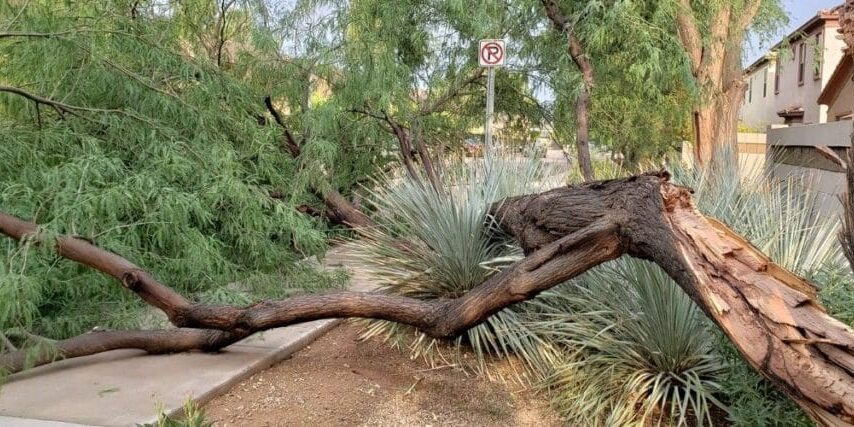
The monsoon has passed, but the leaning palo verde or split-canopied mesquite in your Scottsdale yard is still showing the damage. The fact that it survived the storm is a good start, but what happens in the weeks and months afterward can tell you much more about its chances of recovery.
Some storm-damaged trees need little more than time and appropriate care, while others continue to decline long after the wind dies down. Knowing how to support recovery, what not to do, and which changes signal a bigger problem can help you give the tree a chance without overlooking damage that needs an arborist’s attention.
Key Takeaways
- Recovery is usually measured in months and growing seasons rather than weeks, and the timeline depends on how much canopy, root system, and structural tissue were damaged.
- Deep, infrequent watering at the drip line helps support recovery and encourages deeper root growth for future monsoon seasons.
- Fertilizer isn’t an automatic recovery booster, and a professional evaluation is the only way to know if your tree actually needs it.
- A new lean, worsening bark damage or increasing areas of exposed wood, or continued dieback after the storm are reasons to call an arborist, not signs to wait it out.
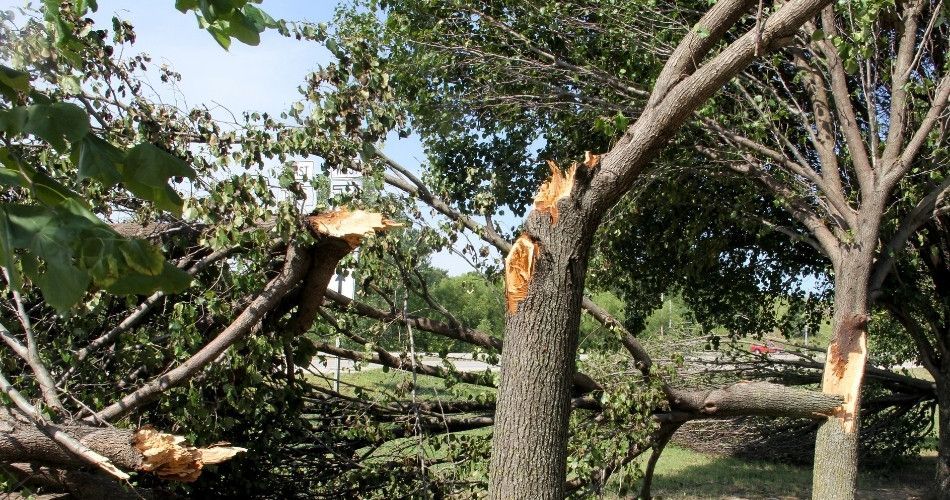
Broken limbs and exposed wood can leave a tree under significant stress, making proper pruning and follow-up care important to its recovery.
Can a Storm-Damaged Tree Fully Recover?
Often, yes, especially if the tree was healthy before the storm and didn’t suffer major structural damage. Recovery depends on how healthy the tree was beforehand, how much canopy it lost, and whether the storm caused significant trunk or root damage. Many healthy trees can recover from substantial canopy loss, but the amount and location of that loss matter. Major trunk or root damage can substantially reduce the likelihood of recovery.
Full recovery also doesn’t necessarily mean the tree will look exactly as it did before the storm. Trees don’t heal wounds in the same way people do. Instead, they compartmentalize damaged wood and grow new tissue around wounds over time. A successfully recovered tree may look different than it did before while still being healthy and structurally sound.
How Long Does Storm-Damage Recovery Take?
A full growing season is a reasonable period over which to judge meaningful recovery, but some trees need longer. The timeline depends on the severity and location of the damage, the tree’s condition before the storm, and the growing conditions that follow. Rather than looking for week-to-week changes, watch for longer-term signs such as new buds, improving leaf color, and a canopy that begins to fill back in.
Give the same watering and care routine time to work before assuming it isn’t. A tree that looks rough in late summer or early fall can look meaningfully better by the following spring or summer, provided it’s getting consistent care in the meantime.
How Should You Water a Storm-Damaged Tree?
Water a storm-damaged tree much the same way you would any other tree: deeply, infrequently, and according to its actual needs. Storm damage isn’t a reason to automatically increase how often or how much you water.
Apply water around the tree’s drip line rather than close to the trunk. According to the University of Arizona Cooperative Extension, that’s where many of the tree’s active, water-absorbing roots are concentrated. Most trees in the Valley have a root zone roughly 18 to 36 inches deep, so the goal is to moisten that zone rather than just wet the surface.
A few habits can help you avoid adding more stress during recovery:
- Water deeply enough to reach the root zone, not just the surface.
- Apply water around the drip line rather than against the trunk.
- Let the soil begin to dry between waterings.
- Adjust watering for the tree, soil conditions, and weather rather than following a rigid schedule.
More water isn’t automatically better. Arizona soils can be compacted or slow-draining, and keeping the root zone saturated can add stress instead of relieving it. The goal during recovery isn’t to give a damaged tree more water, but to make sure it’s getting the right amount without creating another problem.
Should You Prune a Storm-Damaged Tree While It Recovers?
Yes, but only when pruning is necessary to address broken branches, immediate hazards, or other storm damage. Additional pruning to reshape the canopy or correct its appearance can often wait while the tree recovers.
Improper post-storm pruning can set a recovering tree back. Topping, or cutting main branches to stubs to correct a lopsided canopy, removes needed foliage and often produces weakly attached regrowth. University of Arizona guidance also advises against wound paint or pruning sealers on routine cuts because they don’t speed healing.
Once immediate hazards and broken branches have been addressed, an ISA Certified Arborist can determine when additional pruning will support recovery without removing more live tissue than necessary.
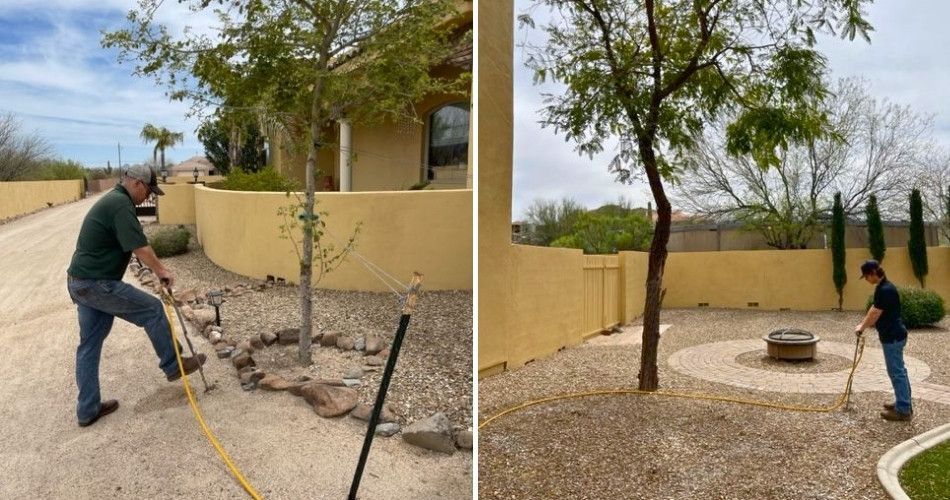
A plant health care technician can evaluate whether a recovering tree needs additional soil or nutrient support instead of assuming fertilizer is the answer.
Should You Fertilize a Storm-Damaged Tree?
Not automatically. Fertilizer isn’t a universal fix, and it isn’t known to speed up recovery in a tree that’s otherwise healthy. It does matter when an underlying soil or nutrient deficiency is contributing to a slow recovery, and that’s something worth having evaluated rather than assumed. An ISA Certified Arborist can evaluate whether your tree would benefit from treatment, rather than you guessing and adding fertilizer your tree may not need.
Is Your Tree Recovering or Getting Worse?
Like the saying goes, sometimes things look worse before they get better. A storm-damaged tree may continue to look sparse, uneven, or stressed for a while even when recovery is underway. The important distinction is whether the damage is stabilizing and the tree is beginning to show signs of new growth, or whether new problems continue to develop.
How to Tell If a Storm-Damaged Tree Is Recovering
Look for signs that the tree is stabilizing or beginning to put energy into new growth:
- New bud growth can indicate the tree is actively recovering
- Improving leaf color is a good sign, though not a guarantee it’s fully in the clear
- Wound edges beginning to callus or seal over suggest the tree is compartmentalizing damage the way it should
- Canopy thinness that’s holding steady rather than getting worse is a reasonable sign things are heading in the right direction
How to Tell If a Storm-Damaged Tree Is Declining
A tree that continues developing new or worsening problems may be headed in the other direction. Watch for:
- A new or worsening lean, different from a lean your tree already had before the storm
- Increasing areas of exposed wood, progressive decay, or bark damage that is worsening rather than stabilizing
- Continued significant dieback beyond what the storm itself caused
- Soft or spongy areas on the trunk, or new cracks that show up after the initial damage
Any of these warning signs is a reason to get a professional evaluation rather than continue to wait and see. An ISA Certified Arborist can tell the difference between a tree that’s recovering and one that’s continuing to decline, which can be difficult to judge from the ground. If you’re still unsure whether a damaged tree was safe to keep in the first place, here’s how to evaluate whether the tree is still safe.
Recovery is also a good time to have a professional confirm that your watering and pruning approach isn’t adding unnecessary stress. If you’d like a second opinion, request a quote and one of our ISA Certified Arborists will check on your tree’s recovery in person.
Frequently Asked Questions About Storm-Damage Recovery for Trees
Can pests or disease take advantage of a tree that’s already stressed from storm damage?
Yes. A stressed tree may be less able to tolerate additional pest or disease pressure, and improper pruning cuts can create extra problems during recovery. It’s one more reason post-storm cuts are worth leaving to a professional.
Is it normal for a recovering tree to look rough for a while before it improves?
Yes. Since trees seal off damaged wood rather than heal it the way people do, a tree can look stressed for a stretch even while it’s compartmentalizing damage correctly. That’s part of why recovery gets judged over months and growing seasons rather than week to week.
How often should I check on a tree that’s recovering from storm damage?
Check the tree periodically, especially after additional wind or rain, and watch for obvious changes such as a worsening lean, new cracks, or spreading bark damage. If anything changes noticeably, have an arborist take a closer look.
Do all storm-damaged trees need a follow-up inspection from an arborist?
Not necessarily, but it’s worth scheduling one any time you’re unsure whether what you’re seeing is normal recovery or a warning sign. A quick professional look early on can catch a tree that would otherwise decline unnoticed.
Can a tree recover on its own without any special care?
Some trees recover with minimal intervention, while others need careful irrigation, pruning, or other treatment. The safest approach is to avoid adding unnecessary stress and have significant damage evaluated before making major changes.
What are common mistakes homeowners make when trying to help a storm-damaged tree recover?
Doing too much in an effort to help the tree recover is one of the most common mistakes. Extra watering, aggressive pruning to fix an uneven canopy, or adding fertilizer without knowing whether it’s needed can create additional stress instead of helping. In many cases, maintaining appropriate care and giving the tree time to respond is better than trying to speed up recovery.
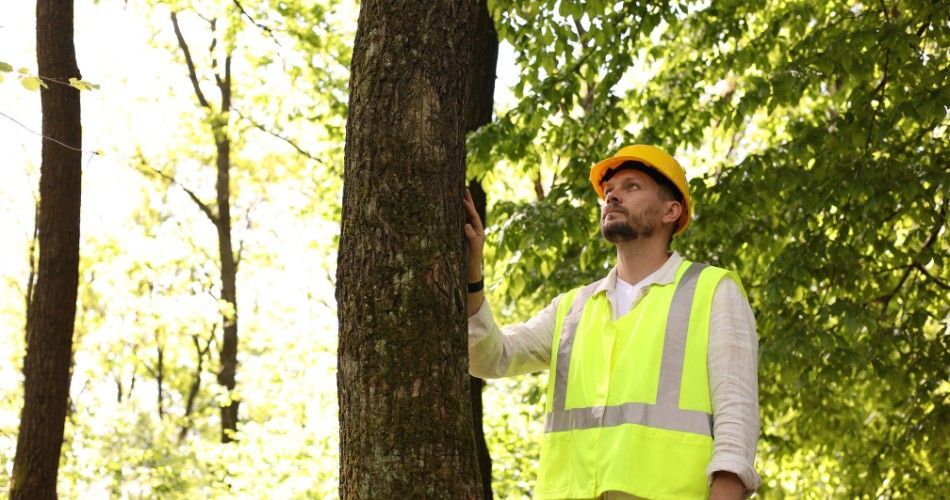
A professional tree assessment can help determine whether a storm-damaged tree is recovering normally or showing signs of continued decline.
Find Out If Your Tree Is on the Road to Recovery
Storm recovery isn’t always obvious from the ground. New growth can be encouraging, but lingering canopy loss, structural damage, or changes that develop over time can make it difficult to know whether your tree needs more time or additional care.
Titan Tree Care’s ISA Certified Arborists can evaluate your storm-damaged tree, identify concerns that may be affecting its recovery, and recommend what to do next. Request a quote or call 480-418-4026 to schedule an assessment at your Scottsdale-area property.

More Articles Like This

Titan Tree Care is a full-service tree care company located in Anthem, AZ and serving all of North Phoenix. We offer a wide range of services to meet your tree care needs, including tree and palm trimming, tree pruning, tree removal, stump grinding, and more. We also offer insect or disease treatments and fertilization services. We are dedicated to providing high-quality, safe, and effective tree care services to our customers and work hard to ensure that your trees are healthy and look their best.