

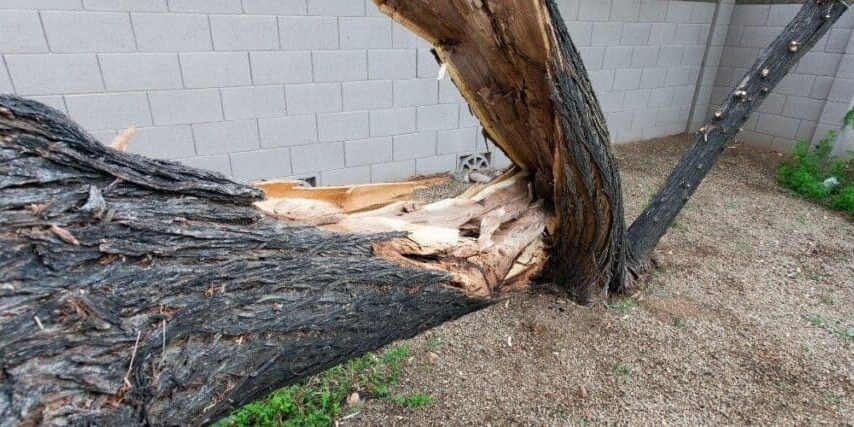
Wondering what to do about a storm-damaged tree? The answer depends on what kind of damage you’re looking at. A broken limb in the outer canopy may be a setback the tree can recover from, while a new lean, split trunk, or shifting roots can point to a more serious structural problem.
For Norterra and Deer Valley homeowners, the difference isn’t always obvious from the ground. Knowing what signs to look for can help you understand whether your tree has a good chance of recovery and what kind of care it may need next.
Key Takeaways
- Downed power lines and limbs still hanging in the canopy call for keeping people, pets, and vehicles clear until the area has been made safe.
- Broken limbs in the outer canopy may be manageable with restoration pruning, while trunk splits and root plate movement can point to more serious structural problems.
- Shallow caliche layers can restrict root development, making root condition an important part of evaluating storm-damaged trees in the North Valley.
- Restoration pruning, crown restoration, and cabling or bracing can preserve some storm-damaged trees, depending on how much sound wood remains.
- Removal makes sense when the split or root damage goes beyond what pruning or bracing can address, or the tree was already in decline.
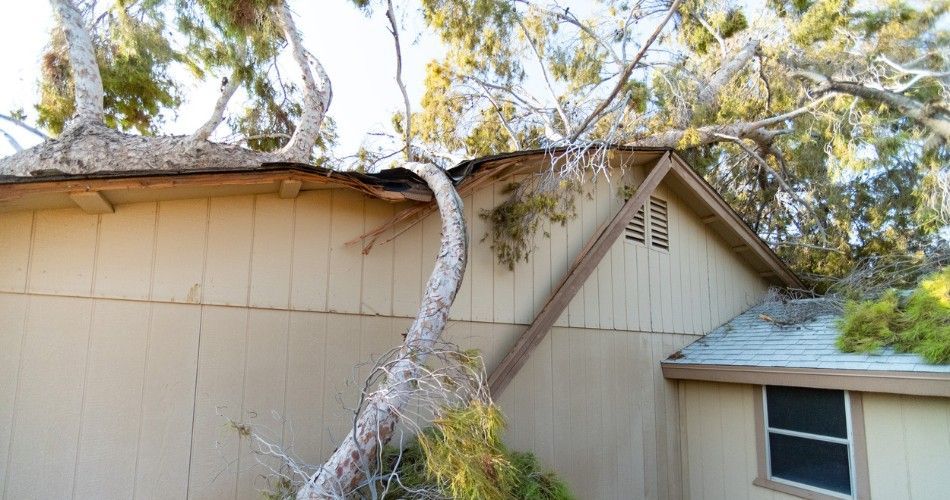
A storm-damaged tree resting on a home can create an immediate safety concern. Homeowners should stay clear of the area and have the tree assessed before cleanup or removal begins.
Start With Safety After a Monsoon Storm
Before you assess anything else, make sure the area around the tree is actually safe to be near. Treat any downed or tangled power line as live, stay away from it, and call the utility company or 911 if it’s blocking an exit or sparking. A limb still hanging or lodged in the canopy can drop without warning, so keep people, pets, and vehicles clear until it’s addressed.
The same caution applies to a tree that’s partially uprooted, has a severely split trunk, or is leaning toward a patio, driveway, or anywhere people spend time. Stay clear of that area until it’s been assessed, even if nothing looks like it’s actively falling. Once the space around the tree is safe, the next step is figuring out what you’re actually dealing with.
What Kind of Storm Damage Are You Seeing?
Different types of storm damage point toward very different outcomes for a tree. Some losses a healthy tree grows past in a season or two. Others compromise the structure in ways that don’t resolve on their own.
| What you’re seeing | What it may indicate |
| A limb hanging or lodged in the canopy | Often recoverable once the limb comes down cleanly, though a limb that tears free on its own can strip bark down the trunk. |
| A single break in the outer canopy | Usually a minor loss. Restoration pruning can often bring the canopy back into balance over a season or two. |
| A break at a major scaffold limb | Can mean significant canopy and structural loss. How well the tree recovers depends on how much sound wood is left and how it compartmentalizes the wound. |
| A trunk split exposing interior wood | May point to reduced structural integrity. The depth and length of the split help determine whether bracing is a realistic option. |
| A new or worsening lean | Often suggests root or trunk movement rather than a cosmetic shift, particularly alongside cracked or heaved soil. |
| Root plate movement: soil lifted, cracked, or pulled away at the base | One of the stronger indications that the root system has been compromised, which can affect anchoring even after the tree is upright again. |
| Scattered minor breakage across the canopy | Usually a health and appearance issue rather than a structural one, though an arborist can confirm there’s nothing more going on if the breakage is widespread. |
Most trees show more than one of these at once, which is why a single symptom rarely tells the whole story.
Can a Storm-Damaged Tree Be Saved?
A cracked trunk or a broken limb doesn’t automatically mean a tree is beyond saving. Several repair approaches exist, and which one applies, if any, depends on the extent of the damage and the tree’s remaining structural integrity.
Proper Pruning Supports Recovery
Removing broken or hazardous limbs correctly, rather than just cutting them off at random points, helps a tree recover its natural form and rebuild strength where it was weakened. This is most effective when the damage is limited to the canopy and the trunk and root system are still sound.
Cabling & Bracing for Weak Unions
Cabling supports a weak limb union high in the canopy, while bracing reinforces a split trunk or included-bark crotch. Both are tools for reinforcing specific structural weak points, not a way to reverse a tree’s overall lean or undo root damage. Whether either applies comes down to where the tree failed and how much sound wood is left to work with.
What Arborists Weigh Before Recommending Repair
Two trees can suffer similar storm damage and have very different chances of recovery. That’s why an arborist evaluates the entire tree before deciding whether repair is a reasonable option. Factors include:
- Species and how well it tends to recover from storm damage
- The tree’s age and health before the storm
- How much structural wood was lost
- Whether the remaining root system can support the tree going forward
In Norterra and Deer Valley, that root assessment carries extra weight. Solid caliche layers can be impenetrable to roots, confining them to a shallow band of soil and leaving trees poorly anchored against strong winds, and caliche sits close to the surface across much of the North Valley. A tree working with an already-restricted root zone has less margin to recover from storm stress than one anchored in deep, well-drained soil.
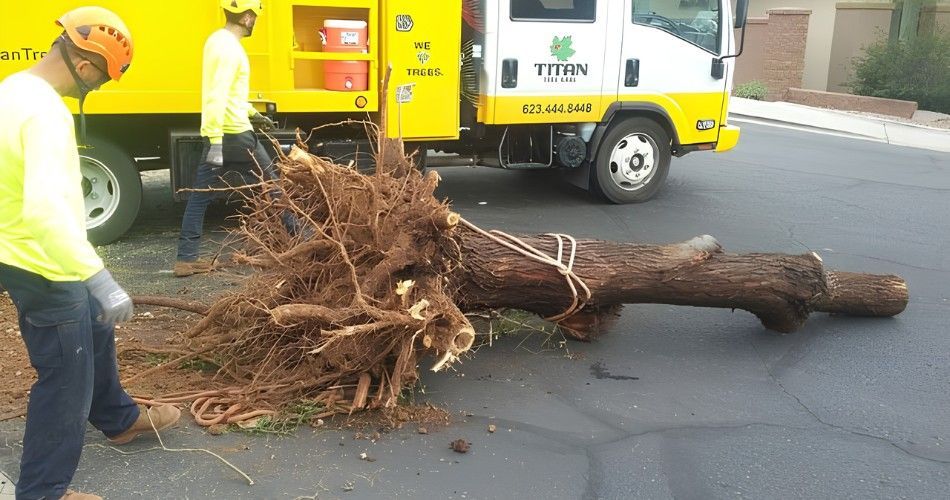
Root plate movement and exposed roots can indicate that a storm-damaged tree has lost critical anchoring. When root damage is too extensive for recovery, removal may be the safest option.
When Is Removal the Better Option?
Removal isn’t the default outcome for storm damage, but it’s the right call when repair isn’t realistic. A few factors tend to point that way:
- The trunk split or root damage extends beyond what pruning or bracing can meaningfully address.
- The tree was already in decline from disease, pests, or poor structure before the storm.
- The tree sits close enough to a structure, driveway, or walkway that an uncertain repair isn’t worth relying on.
Titan’s ISA Certified Arborists weigh all of it against what’s left to work with, then recommend either restoration pruningto rebuild a weakened canopy or tree removal when the structure is past saving.
PRO TIP: New growth pushing from the edges of the remaining canopy the following spring is one of the clearest signs a damaged tree is actively recovering, and a useful benchmark to watch for before making any long-term decisions about the tree.
How to Reduce the Risk of Damage Before the Next Monsoon
Some trees are more prone to storm damage because of how they grew, not bad luck. Codominant stems, where two trunks of similar size emerge from the same point, create a weak union that’s more likely to split under wind stress. A history of improper pruning compounds the problem, leaving an unevenly weighted canopy that catches wind on one side.
Routine inspections and structural pruning give an arborist the chance to identify or correct some of these issues before monsoon winds expose them. Most trees that fail in a storm were showing warning signs long before the wind arrived, and a codominant stem is one of the more common ones in Phoenix-area landscapes.
Frequently Asked Questions About Storm-Damaged Trees
What storm damage should an arborist evaluate?
Damage involving the tree’s main structure is worth a closer look, including trunk splits, a new lean, or soil movement at the base. Minor canopy breakage may be manageable through regularly scheduled pruning, depending on the size and location of the affected limbs.
Does a storm-damaged tree need extra water while it recovers?
Consistency matters more than adding more water. A tree carrying less canopy may also use less water, so increasing irrigation automatically can work against recovery in poorly drained soil. Water according to soil moisture, species, and existing irrigation conditions rather than assuming a damaged tree always needs more.
Is it safe to prune broken branches myself?
Small, ground-level debris is fine to clear on your own, but anything still attached overhead, especially large limbs, should be left to a professional with the right equipment and training.
Can a tree that looks fine after a storm still fail later?
Yes. Root or trunk damage isn’t always visible from the surface, so a tree that came through a storm intact can show problems weeks later. Keep an eye out for new leaning, canopy dieback, cracks, or changes around the roots, and have the tree reassessed if anything changes.
Is storm-related tree damage covered by insurance?
It depends on your policy and the circumstances, so check with your insurance provider directly. Coverage often hinges on whether the tree hit a structure, which is worth confirming before any cleanup begins.
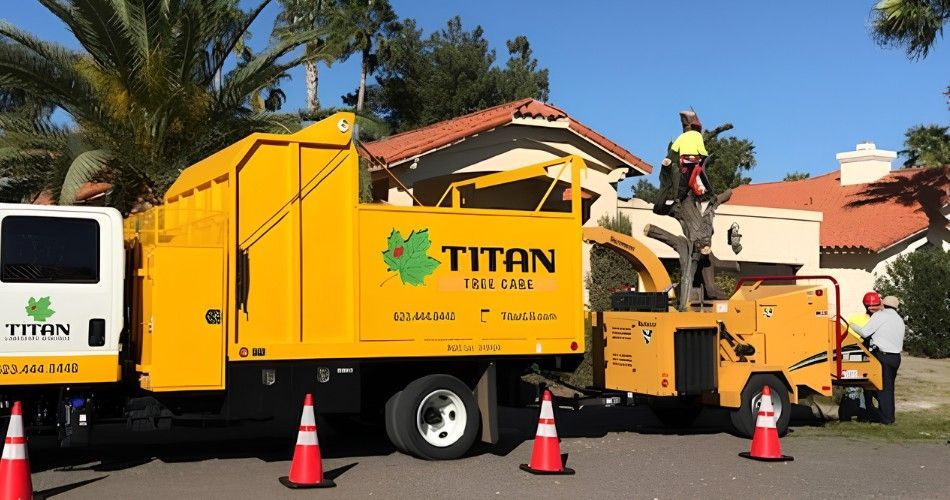
A Titan Tree Care crew uses a commercial wood chipper and chip truck to process debris during a tree removal in the Phoenix area.
Give Your Tree the Best Shot at Recovery
A damaged tree isn’t necessarily a lost tree. What matters is how much healthy structure remains and whether the tree has a realistic path to recovery.
If you’re unsure whether your tree can recover, request an arborist assessment or call 480-418-4026. Titan’s ISA Certified Arborists can determine whether restoration pruning, structural support, or removal is the right long-term approach.
See Our Latest Articles

More Articles Like This

Titan Tree Care is a full-service tree care company located in Anthem, AZ and serving all of North Phoenix. We offer a wide range of services to meet your tree care needs, including tree and palm trimming, tree pruning, tree removal, stump grinding, and more. We also offer insect or disease treatments and fertilization services. We are dedicated to providing high-quality, safe, and effective tree care services to our customers and work hard to ensure that your trees are healthy and look their best.