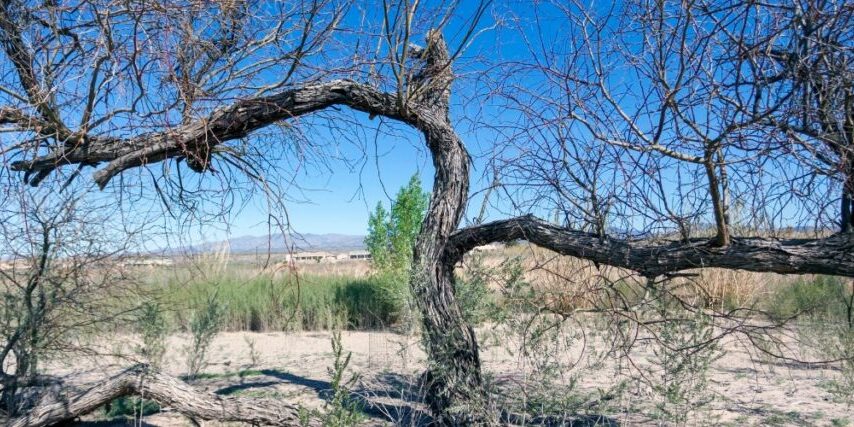
Phoenix just wrapped up its hottest winter on record, with December and February both setting all-time highs. That early warmth pushed some mesquite trees around the Valley to leaf out weeks ahead of schedule. But if yours is one of the trees still bare, it’s easy to start wondering if something’s wrong.
The good news is that most of the time, a bare mesquite in spring isn’t dead. Different varieties leaf out on different schedules, and yours may just be running a few weeks behind. Once you know which species you have, when it should be leafing out, and what to look for under the bark, you’ll have a clear answer — or know when it’s time to call an arborist.
Key Takeaways
- Different mesquite species leaf out at different times in Phoenix — honey mesquites emerge in late February, while Chilean mesquites may wait until April or later.
- A bare mesquite in March is usually still dormant—if you scratch the bark and see green, the tree is alive.
- The #1 mistake homeowners make with a bare mesquite is panic-watering, which causes more mesquite deaths than drought.
- If your tree shows no green tissue under the bark and no leaf buds by late May, it’s time to call an arborist.
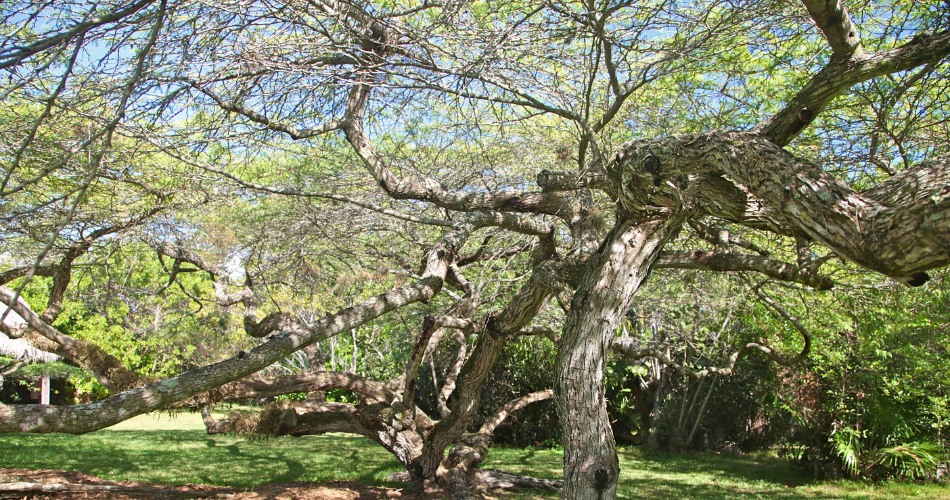
A healthy mesquite tree with a full canopy and the kind of twisted branch structure that makes these trees a signature part of Arizona landscapes.
Why Mesquite Trees Don’t All Leaf Out at the Same Time
In Phoenix, mesquite trees don’t follow one universal schedule. Leaf-out can happen anywhere from late February to April (or even later) depending on the species and growing conditions.
That’s why one tree can be fully green while another nearby is still completely bare. In most cases, it’s not a problem — it’s just how mesquites behave.
What Controls Mesquite Leaf-Out Timing
Mesquites don’t rely on a single trigger to break dormancy. Instead, they respond to a combination of environmental signals, including:
- The end of frost risk
- Warming soil temperatures
- Increasing day length
Each species responds to these signals differently, which is what creates the staggered timing you see across neighborhoods.
When Each Mesquite Species Typically Breaks Dormancy
Here’s when you can expect each common mesquite species to leaf out in the Phoenix area:
| Species | Typical Leaf-Out Window | Winter Behavior |
|---|---|---|
| Honey Mesquite (Prosopis glandulosa) |
Late February – early March | Fully deciduous — drops all leaves |
| Velvet Mesquite (Prosopis velutina) |
Mid-March – early April | Fully deciduous — drops all leaves |
| Chilean/Argentine Hybrids including thornless varieties (Prosopis chilensis / P. alba) |
April or later | Semi-evergreen — may hold some leaves through winter |
Chilean and Argentine mesquite hybrids — including popular thornless cultivars — are the most common landscape mesquites planted by Phoenix builders, so there’s a good chance yours is the latest-leafing species on the block.
FUN FACT: If your property borders a wash or dry riverbed, you may also have a screwbean mesquite (Prosopis pubescens). Screwbeans are native to Arizona but uncommon in residential landscapes. They’re easy to identify by their distinctive coiled seed pods and typically leaf out in March, on a similar schedule to velvet mesquites.
Why Does My Neighbor’s Mesquite Have Leaves and Mine Doesn’t?
In most cases, it comes down to species. As the timeline shows, different mesquites can leaf out weeks apart — so a 4–6-week gap between trees in the same neighborhood is completely normal.
But even trees of the same species don’t always leaf out at the same time. That’s where microclimates come into play.
A mesquite planted near a south-facing wall, next to pavement, or by a heated pool will warm up faster and often leaf out earlier than one in an open yard. Elevation can also make a difference. Areas like Anthem and the North Phoenix foothills sit higher than central Phoenix, which means slightly cooler temperatures, later frost dates, and delayed leaf-out.
How to Tell if Your Mesquite Tree Is Dead or Just Dormant
To tell if your mesquite is dead or just slower to break dormancy, check what’s happening under the bark and at the branch tips. A scratch test will show whether there’s living tissue beneath the surface, and a snap test will tell you if branches are still flexible or brittle and dead. Here’s how to do both.
The Scratch Test (The Most Reliable Check)
The scratch test is the same diagnostic test our ISA Certified Arborists use in the field, and you can do it at home with just your fingernail or a pocket knife. Pick a young twig toward the outer edge of the canopy and gently scrape away a small section of bark:
- Green: If there is slightly moist tissue underneath, the tree is alive, dormant, and completely fine.
- Brown: If the tissue is dry and brittle underneath, that branch is dead.
If the first branch tests brown, that doesn’t necessarily mean the whole tree is dead. Move inward and test a branch closer to the trunk — mesquites can lose outer branches while the core of the tree remains healthy.
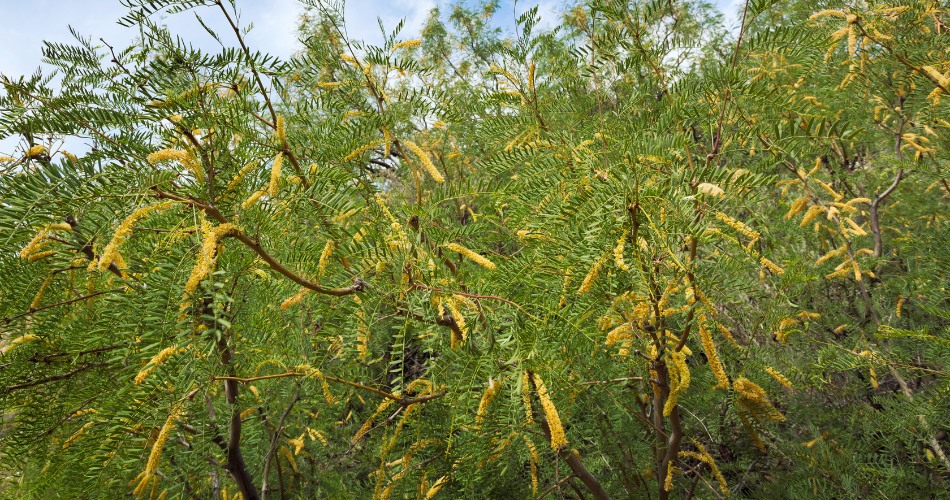
Yellow catkin flowers and fresh green leaves are a sure sign your mesquite has broken dormancy and is healthy.
Snap Test and Spring Bud Check
The snap test gives you a quick secondary read. Grab a small branch and bend it gently. A living dormant branch flexes and bends; a dead branch snaps and feels brittle all the way through.
Starting in March, also look closely at the branch tips for tiny leaf buds forming. Buds are one of the earliest visible signs that your tree is preparing to leaf out:
- No buds by late April is concerning
- No buds by late May likely means the tree isn’t coming back
Keep in mind that these tests apply to spring dormancy. If your mesquite drops leaves in summer or fall, that’s usually heat or drought stress — not a sign the tree is dying.
Will Watering Your Mesquite Help It Leaf Out Sooner?
No—watering won’t speed up leaf-out, and in many cases, it can actually do more harm than good.
If your mesquite looks bare and your first instinct is to grab the garden hose — don’t. Overwatering is the single biggest cause of premature mesquite death in the Phoenix area, and it’s far more dangerous to your tree than drought. Excess water leads to shallow, weak root systems, fast but fragile growth, and trees that are much more likely to blow over in a monsoon storm.
While a bare mesquite needs patience more than anything, it’s also not the time to fertilize a stressed or dormant tree. Let it wake up on its own schedule.
When Should You Call an Arborist About Your Mesquite Tree?
Call an arborist if your mesquite is showing any of these signs by late May:
- No green tissue anywhere on the tree after scratch testing multiple branches
- No leaf buds by late May
- Bark peeling with small holes and amber-colored resin — this could indicate a mesquite borer infestation and means the tree is under serious stress
- Brittle, snapping branches throughout the canopy
- The tree was damaged by a storm, construction activity, or has developed a significant lean
- You’re considering removing a tree that may be dead — our arborists can confirm before you make that decision
Frequently Asked Questions About Mesquite Tree Leaf Out in Arizona
Do all mesquite trees leaf out every year?
Yes, healthy mesquite trees will leaf out each year, but the timing can vary widely depending on species and environmental conditions.
Can a late frost delay mesquite leaf-out?
Yes, even a mild late frost can delay leaf-out by a couple of weeks, especially for species that are more sensitive to temperature changes.
Does pruning affect when a mesquite tree leafs out?
Pruning doesn’t typically change leaf-out timing, but heavy or poorly timed pruning can add stress that may delay new growth.
Can newly planted mesquite trees leaf out later than established ones?
Yes—newly planted trees often leaf out later as they focus energy on root establishment before pushing new growth.
What kind of mesquite tree do I have?
The easiest way to tell is by looking at winter behavior. If your tree drops all its leaves by December, it’s likely a native honey or velvet mesquite. If it keeps some or most of its leaves through winter and has a more manicured look, it’s probably a Chilean or Argentine hybrid — the most common mesquite species in Phoenix landscapes.
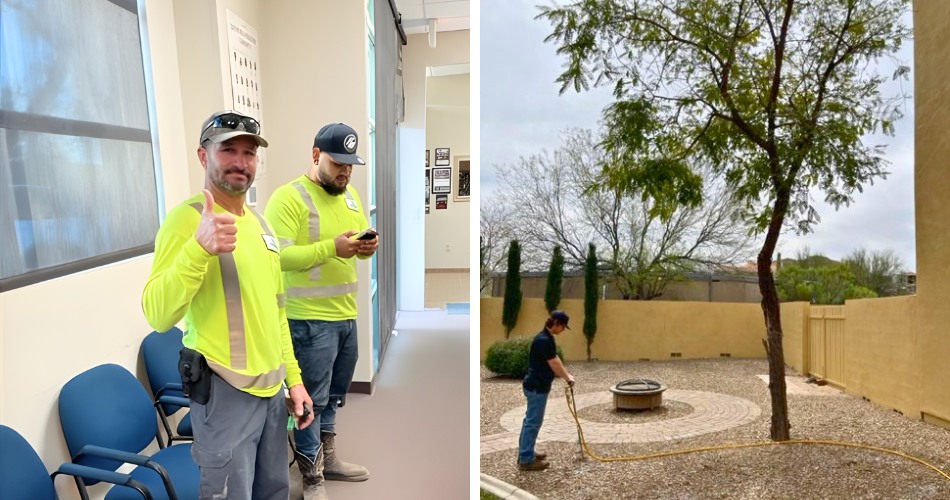
Our team is applying a root drench treatment to a mesquite — one of the professional plant health care services we offer across the North Phoenix area.
Not Sure if Your Mesquite Tree Is Healthy? We’ll Take a Look
A bare mesquite in spring is almost never an emergency. If the scratch test shows green, your tree is fine — it just hasn’t caught up to the rest of the block yet.
If nothing’s changed by late May, our ISA Certified Arborists can evaluate your tree and give you a clear, honest assessment of what’s going on and what to do next. Call 623-444-8448 or request a free tree health assessment.
See Our Latest Articles




More Articles Like This

Titan Tree Care is a full-service tree care company located in Anthem, AZ and serving all of North Phoenix. We offer a wide range of services to meet your tree care needs, including tree and palm trimming, tree pruning, tree removal, stump grinding, and more. We also offer insect or disease treatments and fertilization services. We are dedicated to providing high-quality, safe, and effective tree care services to our customers and work hard to ensure that your trees are healthy and look their best.